

Bits #79
craniometry, the decline of booze, writing scandals + mediocre tv recs. Plus, the best podcast I've listened to this year

Happy almost school holidays to those who celebrate! My latest hack when my kids ask to play/do/eat something that I would rather they didn’t, is to respond “it’s charging”. You have to say it with conviction, particularly when it doesn’t make sense. “Can I have an ice cream?” Sadly not — the fridge is charging.
Under the paywall: three mediocre TV recs (I can’t lie to you); why more and more people are not just sober curious but sober sober; and hands down the best podcast I’ve listened to all year. Where have I been!!!
Quick hits:
Justin Baldoni has ‘broken his silence’ with a vague and earnest video - Vulture’s annotation made me lol. I so desperately want to get to the bottom of Hollywood’s spiciest legal saga of the century and I so evidently never will.
This is a fascinating video by historian Kahlil Greene on ‘craniometry’ and the obsession with footballer Erling Haaland’s face.
“The eugenics framework is so subtle that it seeps into online discourse unnoticed.”
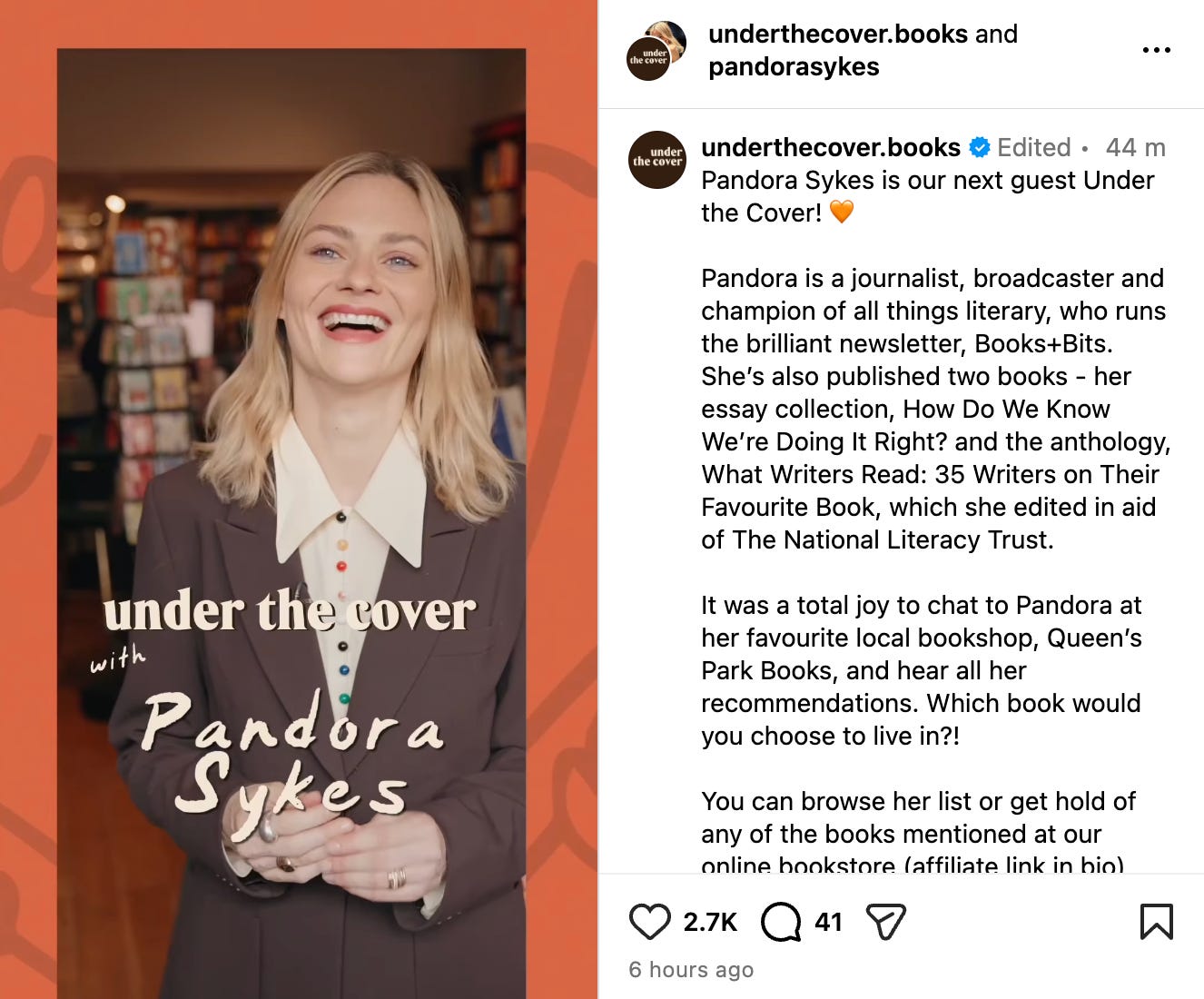
I filmed with Under the Cover a few months ago in my local, Queens Park Books, and it just dropped on IG. I love this account! It was fun to share some recs.

Also love author and illustrator Jon Klassen’s tip: keep a handful of loose index cards in your bag so you always have something for your kids to scribble/ write stories on.
In South Korea, obsessed fan-stalkers are so common they have a special word, saseangs. The intense parasocial nature of K-Pop fandom is why K-Pop stars like Blackpink’s Lisa Manobal and BTS never talk about their private lives. Manobal, the most followed Asian woman on Instagram, tells Vanity Fair, “We’re really grateful, and we feel so lucky”. You sense it’s too risky to say otherwise.
Do you know where your nearest defibrillator is? I did not, until I did a first aid course this week (I’d forgotten everything) and learned about DeFib Finder. There are 3 within 10 mins of my house! Empowering info to have.
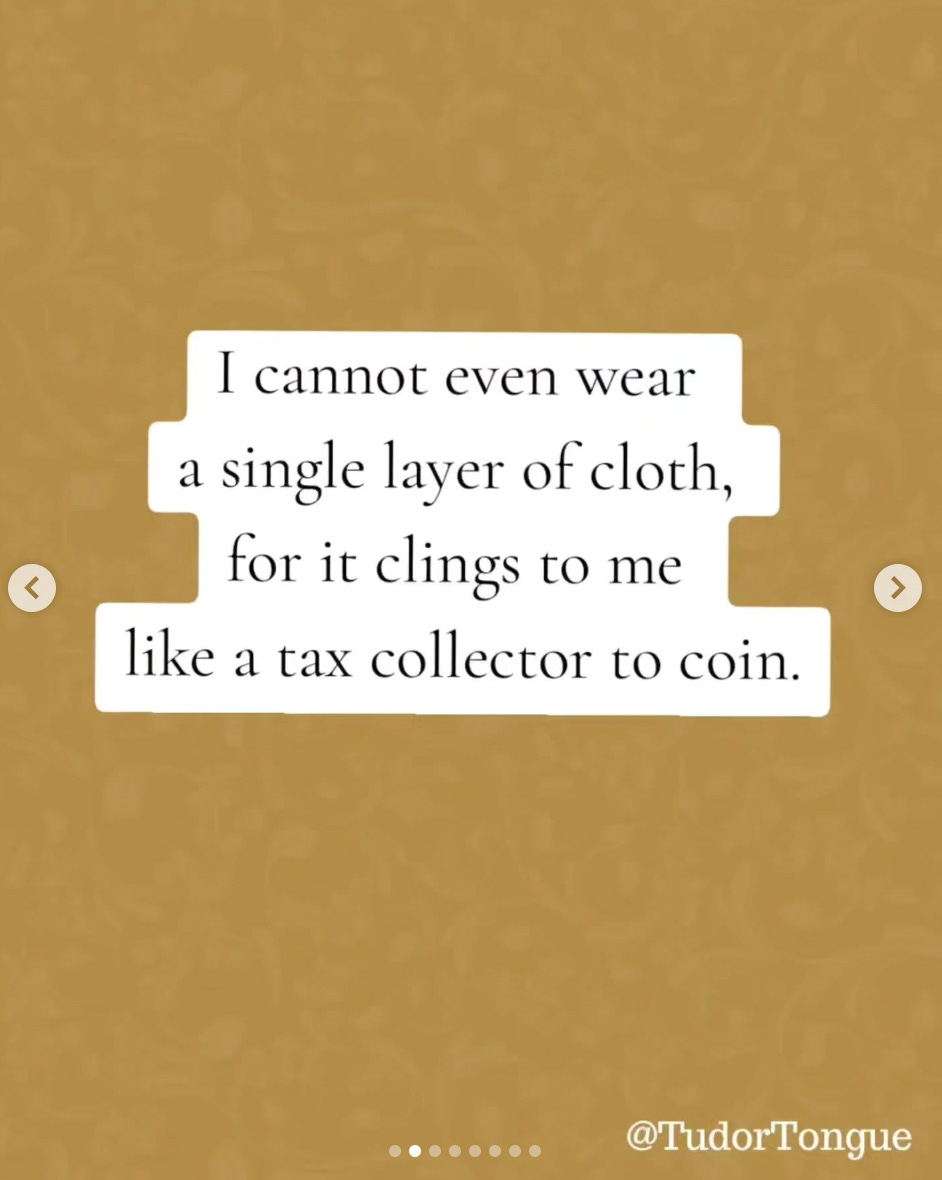
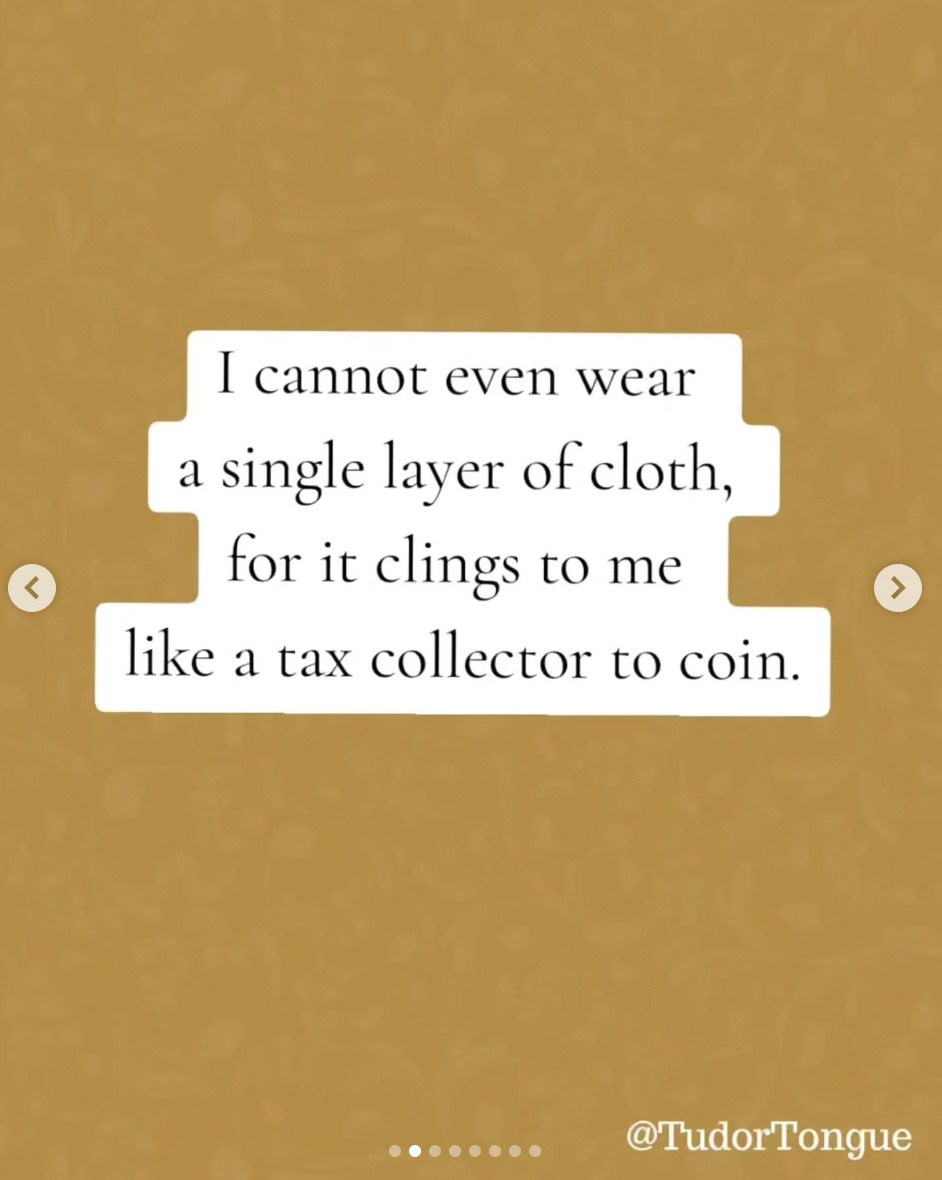
Talking of empowering info, here’s how a Tudor might talk about London’s omni heatwave. (Via the R.U.E.) Two of my faves:

My life is 1% less chaos thanks to this huge blackboard sticker. (I like to freestyle my memos rather than fill in a calendar.) If you don’t want to stick it directly onto your wall, stick it onto a big pinboard.
Gracie Abrams gave NYT’s Popcast the sanest response I’ve ever heard a celebrity give, re: the (quite dull at this point) nepo baby discourse.

Colour me confused over literature’s first AI scandal. A precis for those unaware of the brouhaha. In May, Granta magazine published the winning entries for this year’s Commonwealth Short Story Prize. Readers more discerning than me (I still don’t understand the whole em dash furore) began tweeting - X-ing? - that Caribbean winner Jamir Nazir’s short story, ‘The Serpent in the Grove’, was written using artificial intelligence. AI detector, Pangram, agreed. Granta then run it through the AI chatbot, Claude, who also agreed. The Commonwealth Foundation defended Nazir, a retired Trinidadian civil servant, and went on to award him the overall Commonwealth prize, as well as the regional prize, while Granta went on to end its partnership with the foundation.
Now, I have read ‘The Serpent in the Grove’ - about a struggling farmer called Vishnu who throws his wife Sita down a well so that he can marry another woman - and I truly could not say either way. It’s a bit abstruse, but I have read plenty of mystical, magical, poetic stories which partly stun me and partly wash over me. “Sun on galvanise is a cruel instrument” - a line highlighted as evidence - does not make sense to me, but then neither does a lot of Max Porter’s writing and he’s definitely not using AI.
In a new interview with The Big Think, Nazir says he writes in a “highly polished way” because he uses the speech-to-tech function on his phone due to a neuropathic condition in his fingers. “Three, four inches maximum — that’s all I could see at a time in terms of lines, so I would turn it over and over and ensure all that I had was smooth”. If he is telling the truth, the accusations must be devastating. The stain will likely never go away.
All tools are fallible. Nazir points out that AI is trained on human writing. Thus, he says, these detectors are simply detecting the language they were weaned on.
“Who is a machine to tell me it has already taken over and that the rest of humanity now treats it as the authority on what humans are capable of?”
But is that just a clever, distracting answer? I’m a luddite, I have no idea. I’d love to hear what you think.
I re-read Goon Squad author Jennifer Egan’s iconic 1996 profile of then 16-year-old model Jamie King for The NYT at the weekend, and was struck by how new and exciting the fashion world felt in the mid-nineties. The nineties was the supermodel era: fashion was becoming part of pop culture and models were the new celebrities. Remember, there was very little internet then - only the newspapers and magazines offered this kind of access and reportage. Look back at those early episodes of SATC to see how the excitement surrounding high fashion shimmered in the air. Reading the piece, you can feel it. The longing to know more.
Now the particles have turned to ash. We’ve fatigued of the glitz and the glamour because it’s everywhere, it’s in the ether. We want less glamour, not more: activewear, loungewear, flats. The only models people care about are the ones with skincare lines or immaculately pre-planned streetstyle, while the peeks behind curtains have mushroomed into hourly big reveals. There is no mystery, no drama, very little yearning anticipation. One positive change in the fashion industry since Egan’s piece? Fewer exhausted 14-year-olds.
I took my kids to watch Toy Story 5 on Sunday and while I was amused by the irony of watching an anti-screen movie on a screen, I found it sweet and charming. It’s had pretty poor reviews, but I never saw 3 or 4 (and can’t remember 2) so I don’t have franchise fatigue. It’s hardly a subtle message, but kids don’t need subtle. What’s great is that now I have Toy Story as a reference point for my 6-year-old about how boring screens are/ how fun playing is, and it mostly works!
I really love the imagination behind all the toys characters - the iPad (in this, a ‘Lilypad’) doesn’t want to be useful but has been programmed to be useful and so is replying to the other toys against her will. They keep letting her battery run down, just to spite her, so she lurches around drunkenly, cursing them under her e-breath, trying to erase her own history. And then there’s the battery-operated potty trainer, resurrected from the dead to help Jessie find a friend for her latest kid, Bonnie - the only kid still playing with toys in a friendship group of screens.
I think my 3-year-old was a tad too young for his first cinema trip (he kept patting the woman to his left and offering her his water, sweets, left croc) but it’s perfect for 5-10 year-olds.